
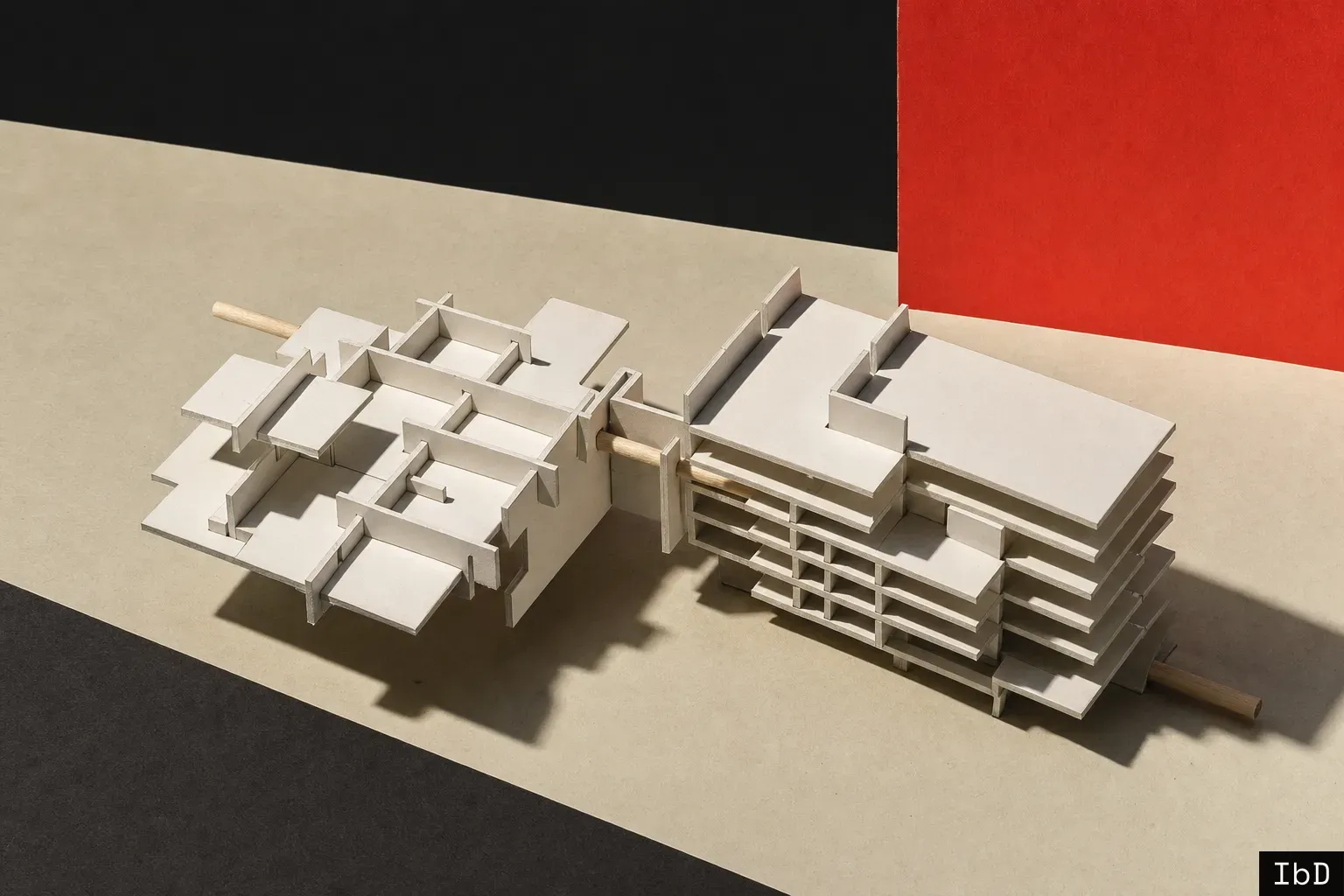
India requires every architecture student to spend a semester working in a professional office, and produces far more students than there are offices to hold them. It also runs its cities with almost no design capacity of their own. These are the same problem twice, and each one is the other's answer.
The training requirement outgrew the offices
Under the Council of Architecture's Minimum Standards of Architectural Education Regulations 2020, framed under the Architects Act, the five-year B.Arch runs to ten semesters of roughly sixteen working weeks each, and includes a semester of practical training in a professional office. The 2020 regulations moved that training into the eighth or ninth semester. It is not optional, and the guidelines for conducting it sit in an appendix to the regulations.
There are around 594 approved institutions imparting the degree. Registrations with the Council ran at 3,411 in 2011 and 13,912 in 2018, passing 14,000 the year after. The number of people needing a supervised sixteen-week placement has roughly quadrupled inside a decade.
The number of professional offices has not.

Indian cities run on almost no in-house design capacity
NITI Aayog's September 2021 report, Reforms in Urban Planning Capacity in India, put the position plainly. Drawing on a study by the Town and Country Planning Organisation and the National Institute of Urban Affairs, it found that states need more than 12,000 town planner posts against roughly 4,000 sanctioned positions, with about half of those sanctioned posts lying vacant. That leaves something in the order of two thousand town planners in post for the entire country.
Sixty-five percent of India's 7,933 urban settlements have no master plan. In several states, the report noted, a qualification in town planning is not even an essential criterion for a town planning job. Most states have not devolved the funds, functions and functionaries for urban planning to urban local governments, three decades after the 74th Amendment said they should.
The report's own remedy is to fill the vacancies and sanction 8,268 additional posts as lateral entries for three to five years. That requires money, recruitment rules and political attention, and five years on it has largely not happened.
A capacity void has a price, and it has been paid
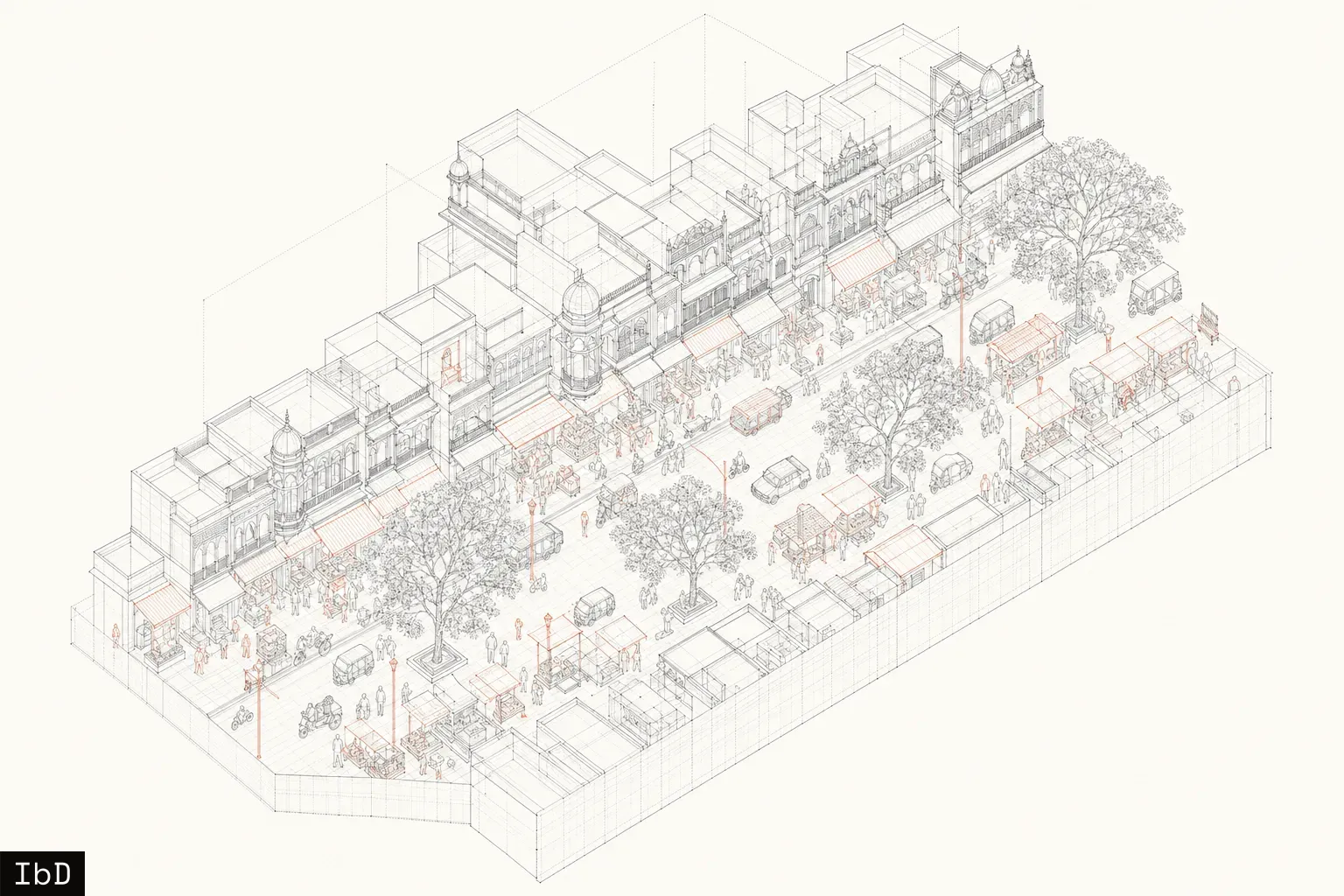
Bengaluru's civic agencies spent around ₹28 crore, with a further ₹6.93 crore from the municipal corporation, redesigning Gandhi Bazaar Main Road through an outside consultant appointed in 2021. Traders shut some five hundred shops in protest. Full pedestrianisation was proposed and abandoned. Around eighty avenue trees were damaged during white-topping. Residents took it to the High Court, which dismissed the petition in January 2025, noting that ₹24.8 crore had already been spent. The carriageway ended up narrow enough that ambulance access became a public complaint.
The interesting failure is not the consultant's work. It is that a corporation with no design staff cannot write a brief worth answering, cannot evaluate what comes back, and has nobody inside the building who owns the drawing when the objections start. Design capacity is not only the ability to draw. It is the ability to commission, judge and defend.
The two gaps have the same shape
Amend the practical training guidelines so that a defined share of the mandated semester may be served in a municipal or development authority design cell rather than a professional office. Same duration, same credits, same assessment, same regulation.
The student gets a placement in a market where placements are scarce, and sixteen weeks inside the institution that actually decides what gets built, which no private office can offer.
The municipality gets a rotating team, at no cost, that can document the local building fabric, draft a facade schedule for a character area, prepare pre-scrutinised plan sets for standard plot sizes, and read a consultant's submission with informed suspicion.
The state gets all of it without a new cadre, a new budget line or an amendment to any Act, because the obligation is already mandatory and already unpaid.
Three things would break it
Supervision is not red tape. The regulation specifies a professional office for a reason, and a design cell with no registered architect responsible for it is not a training environment. The amendment has to require one, which means the first cells need a hire before any student arrives. That is a real cost, though a far smaller one than 8,268 lateral entries.
The work has to be real work. Government internships default to filing and photocopying. A cell with no standing brief will produce sixteen weeks of nothing, and the scheme would discredit itself within a single cycle. Each cell needs a defined output before it takes anybody: the character-area schedule, the plan library, the documentation set.
This is not planning capacity, and should not be sold as one. NITI's finding concerns qualified town planners and its remedy is qualified hires. A semester of an architecture student substitutes for none of that. What it supplies is design capacity at the scale of a street, a drawing set and a schedule, which is a smaller claim and a true one.
The obligation already exists. The labour is already unpaid. The missing piece is a sentence in a set of guidelines the Council of Architecture can amend on its own authority.