
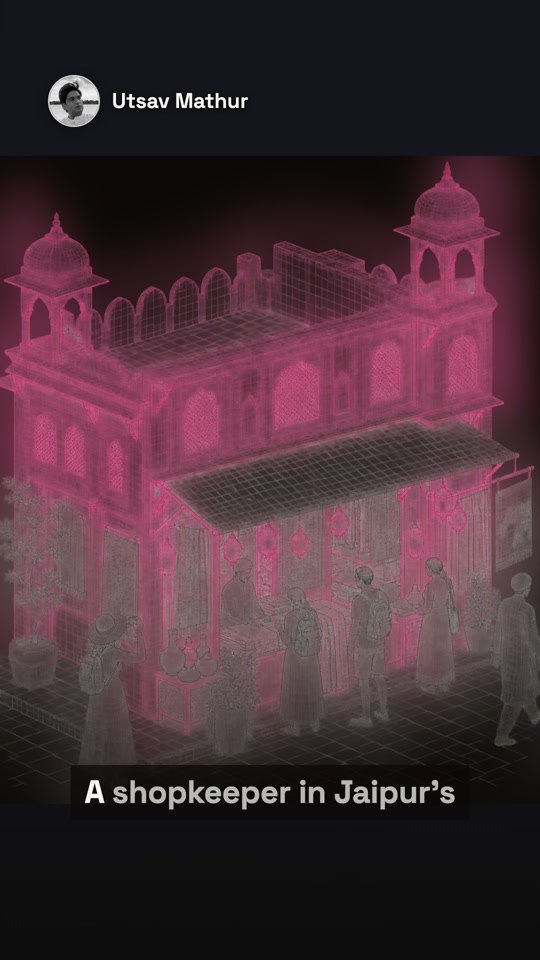
A shopkeeper in Johari Bazaar repaints his facade pink because tourists come for pink. The rule and his interest point the same way, which is the only reason Jaipur still looks like Jaipur.
Strip that alignment out and the same regulation, drafted as carefully, backed by the same World Heritage inscription, produces almost nothing. India has already run that experiment, in Ahmedabad, and the result is on the record.
The state built the facade first, and paid twice
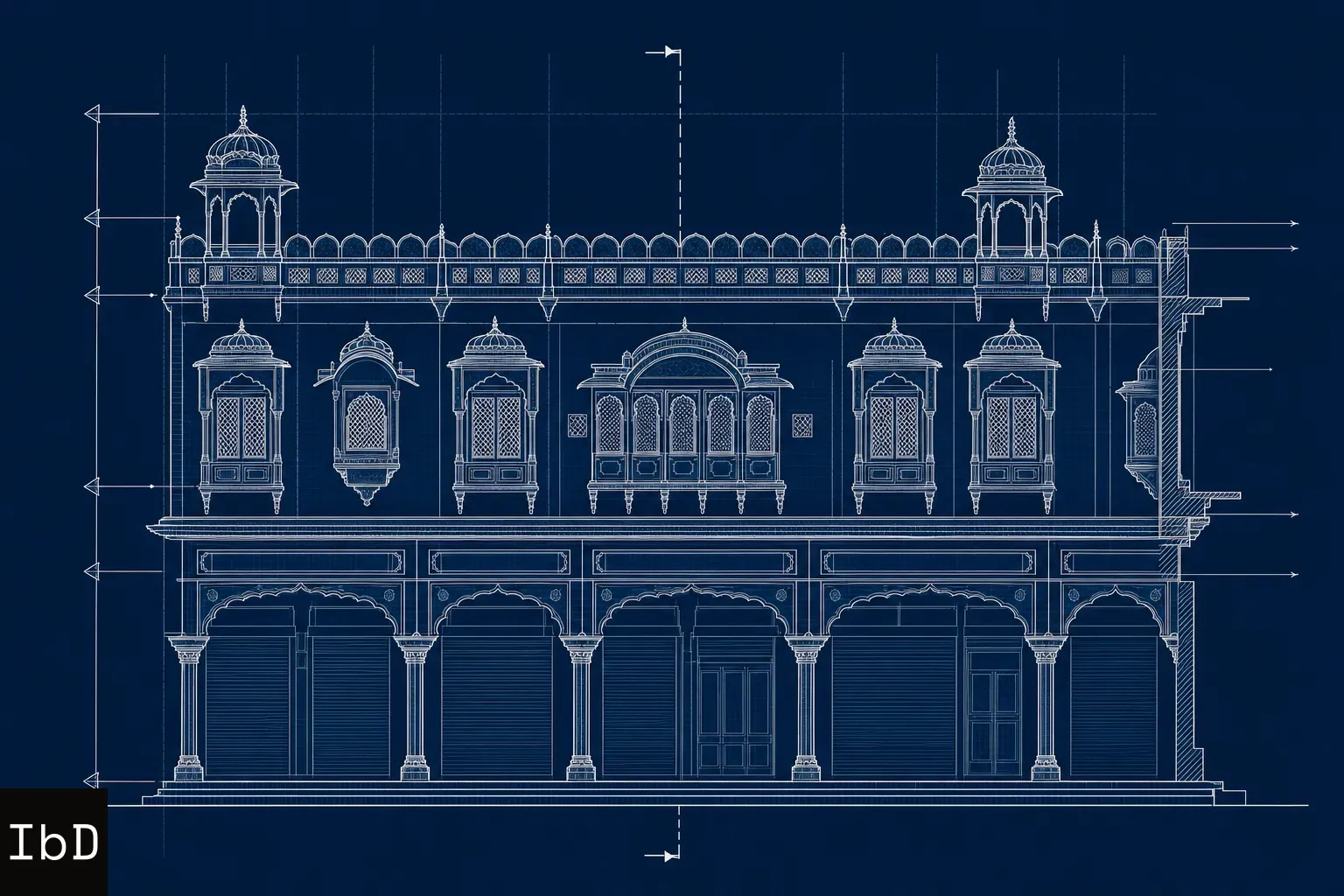
Jaipur's uniformity was not regulated into existence. UNESCO's own inscription records that the main markets, shops, havelis and temples on the principal streets were constructed by the state, which is what ensured a uniform street facade, and that the 1727 plan carried dimensional standards for building heights and road widths.
The founding went further than construction. The Jaipur walled city heritage regulations themselves record that Sawai Jai Singh II established the city as a new commercial centre by inviting traders and giving them tax concessions and gifts of land to settle there. The original street was built by the state and then populated with a subsidy.
The second payment came three centuries later. A conservation project between 2009 and 2013 restored the facades of every building along Chaura Rasta, Tripolia and Johri Bazaar. The remaining nine of the twelve major bazaars are being done now by the Jaipur Municipal Corporation and Jaipur Smart City Limited. The corporation also oversees the pinkish lime wash and the standardised painted signage across the bazaars.
So the public purse has bought the street-facing plane in Jaipur twice, once at founding and once in living memory. Nobody asked twelve bazaars' worth of private owners to produce coherence out of civic feeling.
The rule arrived last and only preserves
Pink dates to 1876 under Ram Singh II, 149 years after the city was laid out. The architectural control that governs the walled city today runs through the Jaipur Building Bye-laws of 1970 and the Rajasthan Municipalities Act of 2009. The dedicated instrument, the Jaipur (Walled City) Heritage Conservation and Protection Regulations, was notified in 2020. A further Nagar Nigam heritage regulation followed in March 2022. Inscription was 2019.
Every one of those is downstream of the thing it protects by between 150 and 300 years. A facade code holds a street. It has never produced one.
The enforcement clause is worth copying verbatim
The 2020 regulations say that an owner who has deviated from the guidelines must reconstruct or restore at his own expense, as per the approved guidelines, within 60 days of notice from the Jaipur Municipal Council, and that this applies even if the front elevation of the building was approved by the Competent Authority.
That final clause closes the standard escape route in Indian development control, which is producing an old sanction letter. Facade control guidelines for the Main Bazar sit as an annexure to the same regulation. The World Heritage Committee has separately pressed the State Party to finalise architectural control guidelines and to bring demolitions under control, so the instrument is newer and less settled than its age suggests.
Drafted well. Which, on its own, turns out not to be the variable.
Ahmedabad wrote an incentive and got 81 takers
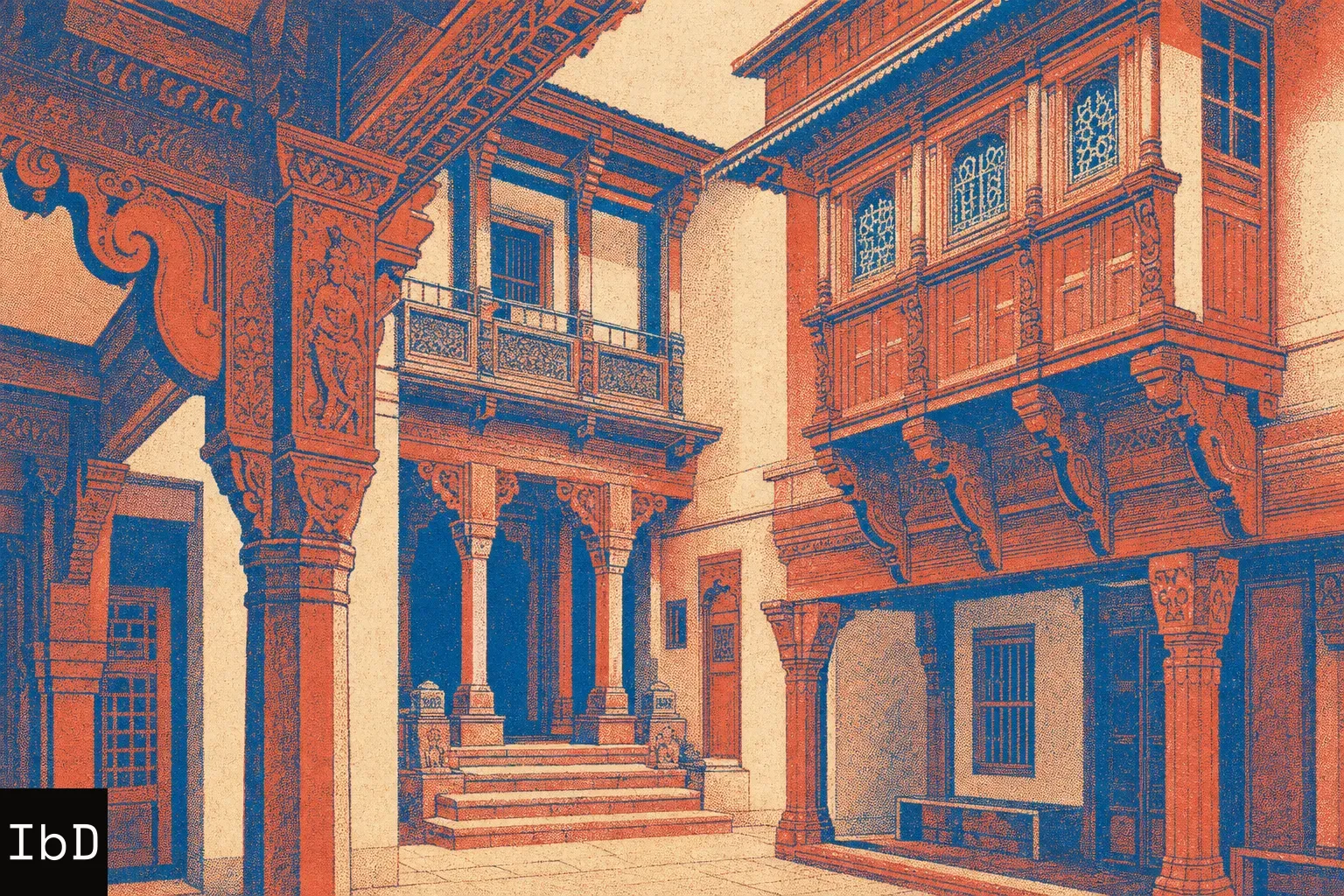
Ahmedabad was inscribed in 2017 as India's first World Heritage City. The Municipal Corporation nominated close to 2,800 heritage structures, most of them private residential properties.
The city also built the incentive. Heritage Transfer of Development Rights was introduced in 2015 specifically to support conservation of privately owned property in the old city. In nine years it produced 81 properties with TDR certificates.
The mechanism explains the number. An owner must initiate restoration, carry the cost, and then apply to the corporation for FSI bonds against which the expense is reimbursed. Meanwhile pol houses are demolished or left to fall, families move out to the newer city, and the heritage conservation committee's own chairman has described ornate homes being replaced by structures wholly incongruous with the fabric.
Same country, same decade, same UNESCO status, opposite outcome. The difference is not the quality of the regulation or the sincerity of the officials.
Jaipur's protected fabric is commercial frontage along twelve bazaars. Ahmedabad's is residential. A jeweller on Johari Bazaar is a shareholder in the pink, because Jaipur drew 6.23 lakh international visitors in 2024 alone, inside a state where tourism runs at around a tenth of gross state domestic product, roughly two and a half times the national average. A family living in a pol receives nothing from the listing except a harder set of rules about their own house.
Three conditions decide whether a rent actually works
The comparison is precise enough to generalise from.
The same person must bear the cost and receive the return. HTDR splits them. Restoration cost falls on a resident household; the resulting development right is something a builder uses on a different plot in a different part of the city. Footfall does not split. The shopkeeper who paints is the shopkeeper who sells.
The return must arrive passively and continuously. Tourists walk past whether or not the owner files anything. A TDR certificate requires an application, a valuation, a buyer, and a functioning market in the instrument. Any return that needs a transaction to realise will be ignored by most of the people it is offered to, and 81 in nine years is what that looks like.
The return must be legible from where the owner stands. A shopkeeper can watch tourists arrive because of how the street looks. Nobody can see the value of an FSI bond, and the people being asked to act on it are not financially sophisticated and have no reason to become so.
Miss any one of the three and the code becomes pure cost, which means it will be evaded at whatever rate enforcement capacity permits.
Jaipur leaks anyway, and that sets the realistic ceiling
Even with all three conditions satisfied, tourism revenue, a dedicated municipal heritage cell, a specific regulation with a 60-day restoration clause, and global inscription, the fabric still slips. Reporting through 2026 describes the uniform facades being eroded incrementally and conservation architects treating UNESCO's concerns as overdue rather than surprising. The Committee's recent state of conservation cycle records parking projects at Atish Market and Janata Market halted, Chaugan Stadium and Anaj Mandi redesigned underground, and Jaleb Chowk redevelopment stalled over an ownership dispute.
The rent is also unevenly distributed inside the walled city. A jeweller on a main bazaar captures far more from the pink than a hardware supplier two lanes behind it, and the framework predicts exactly where compliance frays first.
So the honest ceiling for a well-funded, well-drafted, rent-backed facade regime is broadly coherent and permanently slipping, requiring a standing enforcement body forever. Anything promised above that line is being sold rather than described.
Establish the rent before drafting the guideline
For anyone about to write a character-area schedule, the sequence matters more than the content. Work out who bears the compliance cost, work out who receives the return, and check whether they are the same person before a single clause is drafted.
If they are the same person, the guideline can be tight and the 60-day clause is available to borrow.
If they are not, there are two honest options and the usual third one is not among them. The state can buy the street-facing plane outright, as Jaipur did in 1727 and again from 2009, which is expensive and works. Or it can construct a rent where none exists, by designating, branding and routing footfall into the street until coherence starts paying the people who produce it. Writing the code and hoping is the third option, and it is how most Indian heritage precincts are currently being managed.
Jaipur is not disciplined. It is paid.